Most nutrition apps are obsessed with one number: calories. They've spent years making it faster to count them — photo recognition, barcode scanners, AI estimates in seconds. But here's the thing nobody talks about: knowing you ate 2,100 calories yesterday tells you almost nothing about your nutrition.
It doesn't tell you why you skipped lunch. It doesn't explain why you snacked at 10 PM. It doesn't capture the fact that your "healthy salad" was a stress response, or that your weekend brunch pattern always derails your Monday energy. Calories are the what. But nutrition is shaped by the why.
If you want tracking that actually changes how you eat — not just how you count — here are five things worth paying attention to beyond the numbers.
Two people can eat the exact same 2,000 calories and have completely different outcomes. The difference? Timing.
Eating the bulk of your calories before 3 PM versus after 7 PM has measurable effects on energy, sleep quality, and metabolic response. But most trackers don't surface this pattern — they just add up the daily total and call it done.
When you start noticing when you eat, patterns emerge fast. Maybe you skip breakfast every Tuesday because of early meetings. Maybe your late-night snacking only happens on days you ate lunch after 2 PM. These connections are invisible in a calorie log but obvious in a timeline.
The practical shift: don't just log what you ate. Notice when. Over two weeks, your meal timing pattern will tell you more about your energy levels than any macro split ever could.
Your environment has an outsized influence on what and how much you eat. Research consistently shows that people eat more in social settings, eat faster at their desk, and make different food choices at restaurants versus at home.
Yet no mainstream nutrition tracker asks where you ate your meal. It's treated as irrelevant metadata. It's not.
Tracking location context — even loosely, like "office", "home", "restaurant", "on the go" — reveals which environments support your nutrition goals and which undermine them. You might discover that your weekday home-cooked meals are excellent, but every client lunch adds 800 calories of food you didn't actually want. Or that your "quick bites" at your desk are consistently less satisfying, leading to more snacking later.
This isn't about restricting where you eat. It's about seeing clearly which environments need a strategy.
This is the most undertracked dimension in nutrition — and arguably the most important one. Every meal has a trigger: hunger, habit, boredom, stress, social pressure, celebration, or simple routine.
When the reason is hunger, you're fueling your body. When the reason is stress, you're managing an emotion with food. Both are valid — but they require completely different responses. A calorie counter treats them identically.
Capturing even a brief note about why you're eating creates a feedback loop that calorie counting never can. After a few weeks, you'll see which emotions drive specific food choices, which situations lead to overeating, and which meals are genuinely nourishing versus reactive. This is the difference between data and insight.
You don't need to write a journal entry. Even a single word — "stressed", "hungry", "social", "bored" — attached to a meal log transforms it from a data point into a pattern.
Nutrition science increasingly shows that food combinations matter as much as individual nutrients. Iron absorption doubles when paired with vitamin C. Healthy fats improve the bioavailability of fat-soluble vitamins. A meal with protein and fiber keeps blood sugar stable in ways that neither does alone.
But traditional tracking breaks meals into isolated ingredients and nutrients, losing the combination effect entirely. You see 35g of protein and 8g of fiber as separate line items — not as a combination that kept you full for five hours.
Paying attention to how foods work together in your actual meals — not in a database — helps you understand why some 500-calorie meals leave you energized until dinner and others have you raiding the pantry by 3 PM. The calorie count is identical. The experience is completely different.
The practical approach: after eating, note how the meal made you feel two hours later. Over time, you'll build an intuitive understanding of which combinations work for your body — something no nutrition database can give you.
Daily calorie targets create a pass/fail mentality. You either hit your number or you didn't. This binary framing misses the actual rhythm of human nutrition, which is inherently variable and cyclical.
What matters far more is the pattern. Are your weekdays consistent? Does travel always disrupt your eating? Do you eat less on busy days and compensate on quiet ones? Is there a monthly cycle to your cravings?
Recent research from the Journal of Nutrition confirms that regular eating patterns — consistency in timing, frequency, and composition — correlate with better cognitive function and metabolic health, independent of what's actually being eaten. The pattern is the signal.
The most useful thing a nutrition tracker can do isn't give you today's score. It's show you this week's story — and how it connects to last week, and the week before. That's where real nutritional insight lives: not in a single data point, but in the arc.
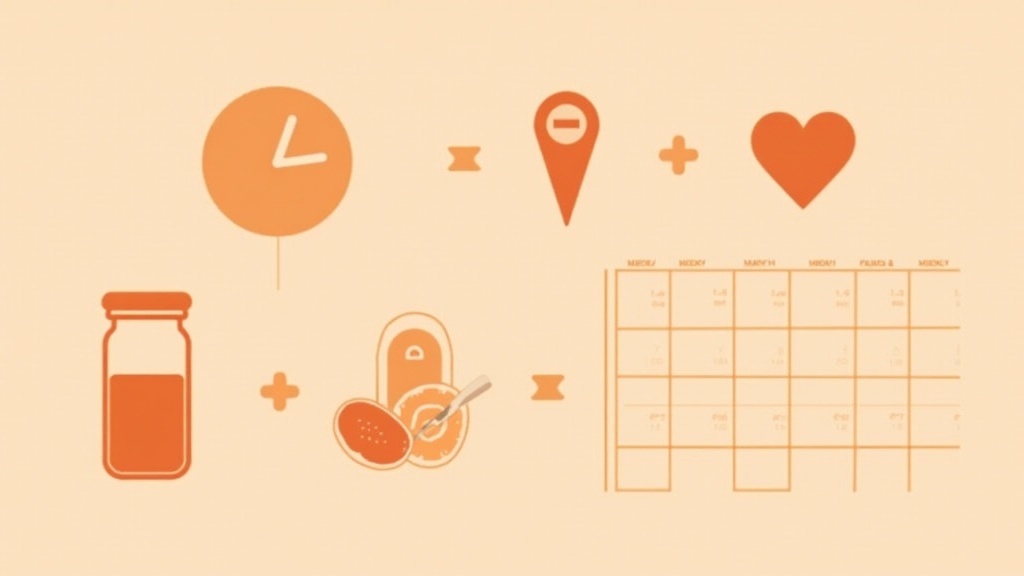
All five of these dimensions — timing, environment, triggers, combinations, and patterns — share something in common: they're contextual. They capture not just what you ate, but the full picture of how nutrition fits into your life.
This is what we call nutritional memory at Diet Mate. Instead of reducing every meal to a calorie count, the app captures the rich context around it — through natural voice descriptions that preserve details a barcode scan never could. Over time, this context accumulates into a personal nutrition history that reveals your patterns, connects the dots between meals and outcomes, and suggests adjustments that actually make sense for your life.
Calories aren't useless. But they're one dimension of a multidimensional picture. The apps that understand this — the ones that track context, not just content — are the ones that will actually help people eat better in the long run. Not by counting harder, but by understanding more.