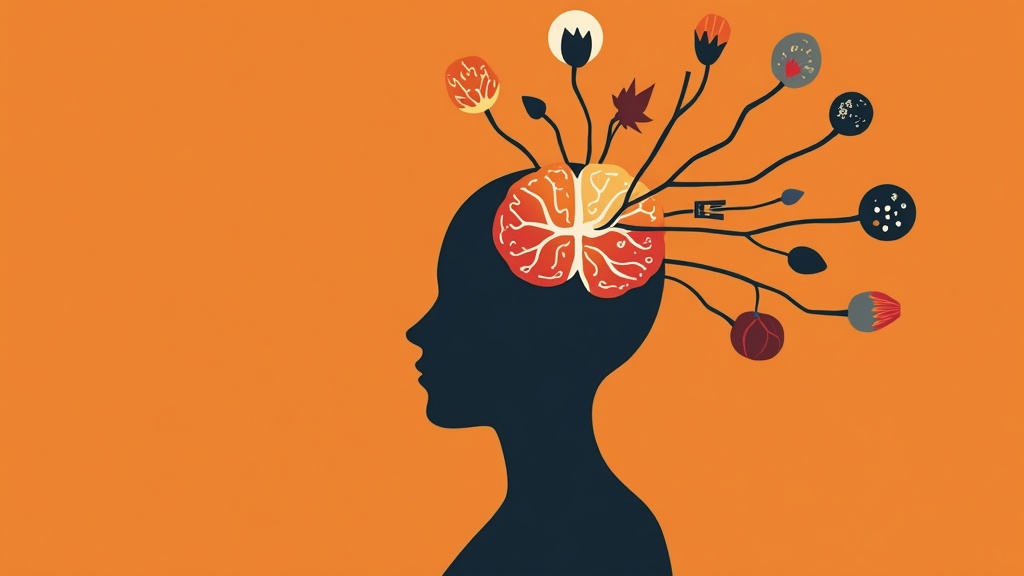
You finished lunch two hours ago. Someone asks what you had. Your mind goes blank. It's not laziness or lack of attention. Your brain actively forgot what you ate—and that forgetting has measurable consequences for your metabolism and weight.
For decades, nutrition science treated memory as an afterthought. Calories were the story. Portion sizes were the story. What you ate was the story. But research from cognitive neuroscience reveals something counterintuitive: what you remember about eating matters as much as what you actually consumed. And in a world of distracted eating, multitasking meals, and phones at the table, our nutrition memory is deteriorating in real time.
A startling finding emerged from research on episodic memory and weight control: deficits in episodic memory—the ability to recall specific events—are directly related to uncontrolled eating. Scientists discovered that people with weaker meal memories don't just struggle to track their intake. They eat more in subsequent meals because their brain hasn't registered the previous one.
This is not a character flaw. It's neurobiology. When you eat without conscious recall—scrolling through your phone, watching a screen, in a rush between meetings—your ventral hippocampus, the region that encodes meal memories, barely activates. Without that encoding, no memory forms. And without memory, the natural inhibitory signal that says "you already ate" never reaches your brain.
The research is clear: memory of recent eating normally suppresses appetite and prevents overeating. It's an evolved mechanism, a safety brake. But modern eating habits have disabled it.
Calorie-counting apps have dominated nutrition for a decade. Open one, log your food, check your numbers. The math is elegant. The psychology is broken.
Why? Because nutrition exists in context, but calorie counting strips it away. Traditional tracking captures what but erases everything else: When did you eat? Where? Who were you with? What were you feeling? Were you actually hungry? Were you stressed, bored, celebrating, or just eating because food was there?
A 200-calorie snack means something completely different if it was a planned afternoon break versus an unconscious handful from a break-room bowl. The calorie number is identical. The nutritional reality is not.
Research on the relationship between memory and eating reveals a bidirectional dynamic: what you remember shapes what you eat next, and what you eat next depends on what you remember. When that loop breaks—when you can't or won't recall previous meals—decision-making collapses into reactive eating. You eat based on hunger signals alone, which are unreliable guides in an environment engineered to override them.
Counting calories without capturing context is like tracking distance without mapping terrain. The number tells you something, but not what matters.
Neuroscientists have identified the specific mechanism: specialized neurons in the ventral hippocampus encode and store detailed memories of meals. These aren't abstract food names. They're episodic snapshots—the full sensory and contextual experience of eating.
When you eat attentively, this encoding happens automatically. The brain records: That sandwich at my desk, 12:30, after the morning meeting, satisfied my hunger. This memory creates a coherent narrative. When you're hungry later, your brain can reference it.
When you eat distracted, the process fails. The food passes through your mouth and disappears from your memory almost immediately. Your brain has no record. Neurologically speaking, you never ate it.
Research on cognitive control of eating demonstrates that suppressing appetite—the conscious decision not to eat—depends on remembering past meals. Without that memory anchor, willpower becomes abstract.
One striking finding: calories count for memory, but they count differently. Scientists found that eating is evolutionarily special—your brain devotes unusual neural resources to remembering food, more so than other activities. It's survival machinery. But that machinery only works when you're paying attention.
Here's the insight that changes everything: you don't have a food problem. You have a memory problem. Or more precisely, you have a problem with fragmented data that lacks narrative.
Every meal you eat exists in isolation in a tracking app. Monday's lunch. Wednesday's dinner. No story. No pattern. No cause and effect.
Your brain craves narrative. It evolved to detect patterns in behavior so it could predict outcomes and adjust. But fragmented data—a disconnected list of meals—defeats that capability. You log, you see calories, you move on. Nothing changes because nothing connects.
This is why willpower fails. Not because you're weak. Because you're working with a broken information system.
When you capture context—the why alongside the what—everything shifts. You start seeing patterns that invisible calorie counting never reveals. Maybe you always overeat after certain meetings. Maybe you eat bigger portions when you're tired. Maybe you graze mindlessly when you're at home, but eat normally at the office.
These patterns are invisible in a calorie list. They're obvious in a memory.
Research demonstrates this empirically: capturing episodic details about eating—context, circumstances, emotional states—directly improves eating behavior. Not through willpower. Through awareness.
What if your nutrition app didn't just ask "what did you eat?" but captured "what were you doing, how did you feel, what were you thinking?" What if instead of isolated data points, it built a personal nutritional database—your memory, systematized and searchable?
This is what nutritional memory does. It transforms eating from a fragmented series of forgotten moments into a coherent, pattern-rich history. Your brain can see itself. It can recognize the moments that matter.
The implications compound. With real nutritional memory, an AI system can do something calorie counting never could: detect meaningful patterns. Not just "you ate too much," but "every Tuesday after 3 PM you're reaching for snacks, and it happens when you skip lunch." Not just "you exceed your goal," but "when you eat meals with protein at breakfast, your afternoon choices improve."
These aren't obvious patterns. They emerge from context and narrative. They're invisible in spreadsheets of calories, but obvious in a memory map of your actual behavior.
Diet Mate approaches nutrition differently: instead of asking you to calculate and input data, it builds your nutritional memory automatically through voice. You speak naturally about what you ate—the context emerges in conversation. When did you eat it? What were you doing? How did you feel after?
The app captures the full picture, not just the calories. Over time, this creates something traditional tracking never builds: a personal nutritional database that reflects reality. Your memory becomes data. Your patterns become visible. The AI doesn't guess about what will work for you—it analyzes what actually works, based on your behavior.
This matters because behavior change doesn't come from willpower or numbers. It comes from understanding yourself. From seeing your own patterns. From building nutritional memory that sticks because it's rooted in context, not abstraction.
The research is unambiguous: memory of what you eat is not peripheral to nutrition. It's central. Forgetting what you eat isn't a minor inefficiency. It's a break in the neurobiological loop that normally regulates appetite and prevents overeating.
In a modern environment engineered to maximize consumption, that break is costly.
The solution isn't more discipline. It's not stricter calorie goals or willpower hacks. It's rebuilding nutritional memory—capturing not just what you eat, but the full context of eating.
When you can remember accurately, your brain can see patterns. When it sees patterns, behavior changes naturally. The brain that remembers eats better. Not because it's forcing itself. Because it finally has the information it needs to make decisions aligned with what you actually want.
The science is settled. The question now is simple: will you remember what you eat?