8
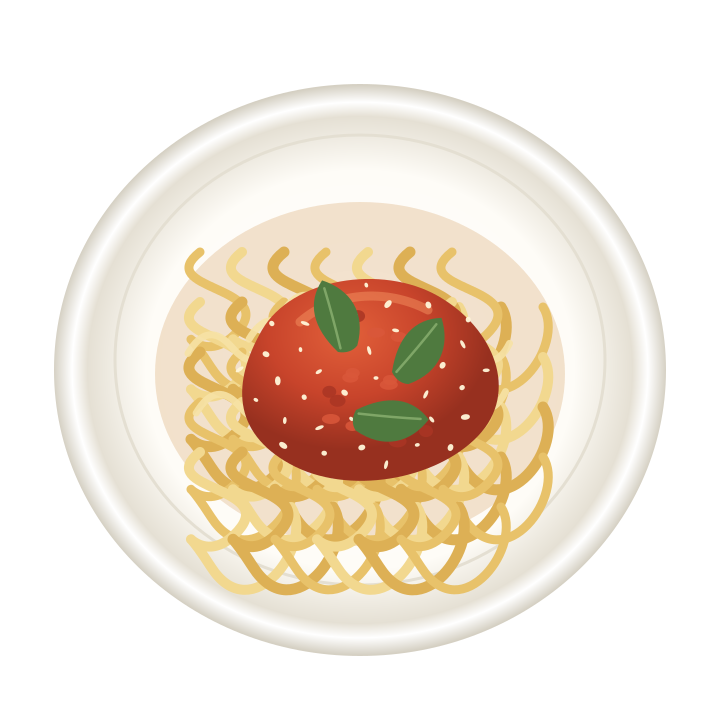
Pasta with tomato and basil
“Back from Rome on Sunday, I wanted to recreate the trattoria’s. Not quite there, but getting close.”
Nutritional memory
Nutritional memory is the history of your meals, enriched with the context you choose to share: where you were, who you were with, what made you pick that dish. Numbers and a story in the same place, meal after meal: enough to ask your eating questions no app could ever handle. It belongs to you.
“Back from Rome on Sunday, I wanted to recreate the trattoria’s. Not quite there, but getting close.”
Context
The moment, the craving, the people around the table, how hungry you were: these details matter as much as the ingredients when you want to find a meal again. The AI can find them or sum them up. What you haven’t told it, it doesn’t invent.
Dietitians often ask their patients to keep a food diary: what they eat, but also the time, the place, who they were with, how hungry they were, what was going on around the meal.
Nutritional memory is that diary, kept by voice and preserved over time. It’s for you first. You can also open it to your dietitian with their code, and close the access whenever you want.
What it gives you
A chart gives you an average. Your memory holds hundreds of meals, each with its numbers and your story. Plugged into a frontier AI, it crosses everything: periods, contexts, nutrients, weight, activity, goal. It’s the level of analysis of a data team, applied to your own eating.
Most of these questions mean connecting your AI (Pro). All of them are about what you’ve recorded, nothing else.
Your memory reflects what you’ve told it. A day with no entry isn’t a day with no meals.
The nutritional figures are estimates. What keeps coming back in your notes is an observation: it opens a question, it doesn’t give the cause.
If a professional is supporting you, your memory becomes a basis for discussion. Your lived experience and their judgement do the rest.
Start with what you’d like to be able to find again.
One meal and one detail from your day are enough to begin.
La mémoire nutritionnelle
La mémoire nutritionnelle, c’est l’historique de tes repas, enrichi du contexte que tu choisis de confier : où tu étais, avec qui, ce qui t’a fait choisir ce plat. Des chiffres et un récit au même endroit, repas après repas : de quoi poser à ton alimentation des questions qu’aucune app ne savait traiter. Elle t’appartient.
« Retour de Rome dimanche, je voulais refaire celles de la trattoria. Pas encore ça, mais on s’approche. »
Le contexte
Le moment, l’envie, les gens autour de la table, la faim : ces détails comptent autant que les ingrédients quand tu veux retrouver un repas. L’IA peut les retrouver ou les résumer. Ce que tu n’as pas raconté, elle ne l’invente pas.
Les diététiciens demandent souvent à leurs patients de tenir un carnet alimentaire : ce qu’ils mangent, mais aussi l’heure, le lieu, avec qui, la faim, ce qui s’est passé autour.
La mémoire nutritionnelle, c’est ce carnet, tenu à la voix et gardé dans le temps. Elle sert d’abord à toi. Tu peux aussi l’ouvrir à ta diététicienne ou à ton diététicien avec son code, et refermer l’accès quand tu veux.
Ce que ça te donne
Un graphique te donne une moyenne. Ta mémoire, elle, contient des centaines de repas, chacun avec ses chiffres et ton récit. Branchée à une IA de pointe, elle croise tout : périodes, contextes, nutriments, poids, activité, objectif. C’est le niveau d’analyse d’un service de données, appliqué à ta propre alimentation.
La plupart de ces questions supposent de connecter ton IA (offre Pro). Toutes portent sur ce que tu as enregistré, rien d’autre.
Ta mémoire reflète ce que tu lui as confié. Un jour sans entrée n’est pas un jour sans repas.
Les repères nutritionnels sont des estimations. Ce qui revient dans tes notes est une observation : elle ouvre une question, elle n’en donne pas la cause.
Si un professionnel t’accompagne, ta mémoire devient un support de discussion. Ton vécu et son jugement font le reste.
Commence par ce que tu aimerais pouvoir retrouver.
Un repas et un détail de ta journée suffisent pour commencer.