TL;DR
The nutrition app category has spent years making food easier to enter. Search became barcode scanning. Barcode scanning became photography. Photography is becoming a conversation with AI. Each step removes friction, but all of them still answer the same old question: how quickly can this meal become a row in a database?
A memory-first nutrition app starts with a different question: once the meal is recorded, what should the system remember for you?
That change sounds small. It is a category change. A tracker optimizes the input. A memory system optimizes what becomes possible after the input has accumulated.
Traditional food diaries are organized around a day. They show breakfast, lunch, dinner, snacks, calories, and nutrients. That daily view can be useful, especially when a clinician or dietitian has asked for structured monitoring. But a diary is mostly a record of events. Its value resets every morning unless someone does the harder work of connecting one day to another.
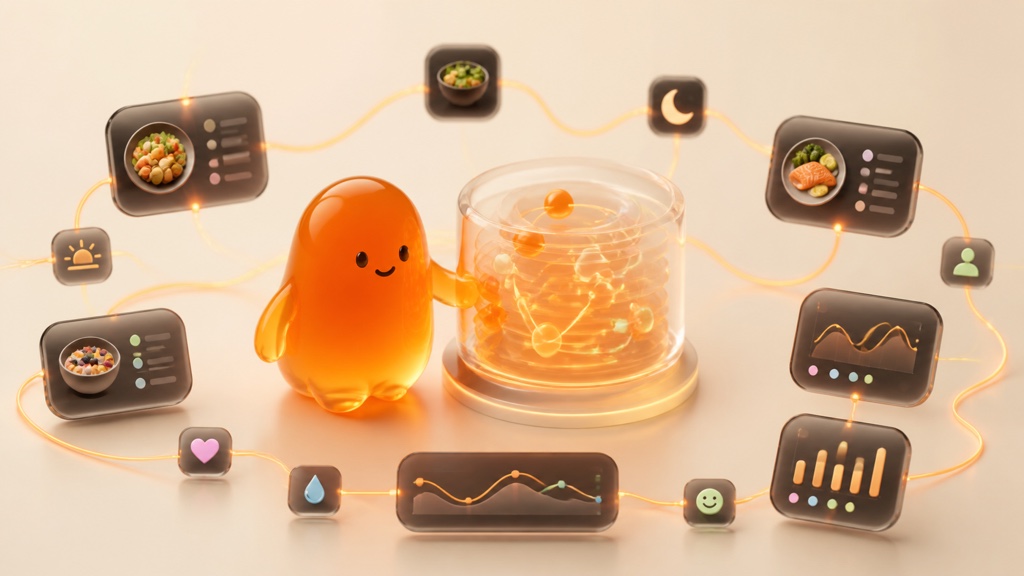
A memory-first product is organized around continuity instead. It keeps the daily record, then adds the layer most diaries leave to the user:
This is the distinction Diet Mate calls nutritional memory: not perfect recall, not a medical diagnosis, and not a score of how "good" someone ate. It is a structured record that becomes more informative as context accumulates.
Most apps already say they are personalized. Usually that means a target calculated from age, height, weight, activity, and a selected goal. That is personalization at setup. It changes the starting numbers, but it may not learn much from what happens next.
Nutrition research gives a reason to care about the difference. In the PREDICT 1 study, researchers measured post-meal metabolic responses in 1,002 adults and found substantial variation between individuals, even after identical meals. The study did not establish that an app can predict how any one person should eat. It did show why a universal response model is too simple. The same input does not reliably produce the same response for everyone. Read the primary PREDICT 1 study.
Personalization also appears more useful when it is delivered as ongoing feedback rather than a static label. The six-month Food4Me randomized trial enrolled 1,607 European adults. Participants who received personalized nutrition advice improved their dietary patterns more than the conventional-advice control group. The trial evaluated a specific intervention, not the memory-first category, so the responsible inference is limited: relevant feedback based on personal information can support behavior change. It is not evidence that software alone guarantees an outcome. Read the primary Food4Me trial.
A newer randomized trial of an 18-week personalized nutrition program combined food characteristics with individual post-meal responses, microbiome information, and health history. It reported improvements in several cardiometabolic measures compared with standard advice. Again, this validates the value of richer personal context inside that studied program. It does not turn a consumer tracker into treatment. Read the primary Nature Medicine trial.
Together, these findings support the premise, not the promise. People differ. Context matters. Feedback can be useful. A memory-first nutrition app should therefore help a person preserve and revisit their own evidence while staying clear about uncertainty.
| Layer | Logging-first app | Memory-first app |
|---|---|---|
| Capture | Stores foods and quantities | Captures the meal plus meaningful context |
| Time | Optimizes today's totals | Connects days, weeks, and recurring situations |
| Personalization | Sets generic targets from a profile | Learns from corrected personal history |
| Output | Shows numbers and streaks | Returns patterns, reminders, and questions |
| Relationship | Asks the user to feed the diary | Gives accumulated knowledge back to the user |
1. Fast capture. Memory cannot compound if recording is too demanding. Voice, photo, search, and reuse can all reduce effort. None is the category by itself. They are ways to keep the memory supplied.
2. Context that survives. "Pasta" is a food entry. "Late pasta after a delayed train, shared with friends, felt satisfying" is a memory with potential relevance. Not every detail needs to be quantified. The system needs enough context to distinguish situations that look identical in a nutrient table.
3. Corrigible interpretation. AI will misread meals. Databases will contain errors. A memory-first system should make corrections easy and preserve them. Personalization built on uncorrectable mistakes is merely confident noise.
4. Pattern retrieval. A graph is not automatically insight. The useful output is a pattern tied to a decision: what breakfasts tend to work before long meetings, what changes on travel days, or which meals keep returning because they are practical and enjoyable.
5. Boundaries and control. Nutrition history is intimate. A credible category needs clear consent, access controls, exportability, and honest limits on inference. The product should distinguish what was recorded, what was calculated, and what was inferred.
It is not an AI nutritionist. It cannot diagnose a deficiency, explain a symptom, or replace a qualified professional. It should not infer causation from a loose correlation, and it should never turn a difficult week into a moral verdict.
It is also not anti-calorie or anti-macro. Calories and nutrients can be useful measurements. The category argument is narrower: a measurement becomes more useful when it sits inside time, context, and a history the person can understand.
Finally, memory-first does not mean maximal surveillance. More data is not always better. The goal is the smallest useful record that helps a person remember, compare, and decide. A system that collects everything but explains nothing has built an archive, not a memory.
Before calling a nutrition app memory-first, ask five questions:
If the answer is no, the product may still be an excellent calorie counter, scanner, or diary. It is simply solving a different job.
Diet Mate is built around the memory-first thesis. A meal can be described naturally, then kept as part of a longer nutrition history instead of disappearing into a daily total. The ambition is not to tell people that an isolated meal was good or bad. It is to help them build a useful, corrigible record of how they actually eat.
That makes Diet Mate an example of the category it is proposing, not proof that the category is finished. The standard should remain demanding: less friction, more context, useful recall, explicit uncertainty, and control for the person whose history gives the system its value. The broader concept is explained in the guide to nutritional memory.
What is a memory-first nutrition app?
It is a nutrition app that turns meal history into durable, contextual knowledge. It preserves what happened, connects repeated situations, and returns useful patterns later instead of stopping at a daily total.
Is a memory-first nutrition app a calorie counter?
It may include calories and nutrients, but those are inputs rather than the whole product. The defining value is what the app can remember and return across time.
Does personalized nutrition guarantee better health?
No. Some randomized trials show benefits from specific personalized programs, but results depend on the intervention and population. A consumer app should not turn those findings into a universal medical promise.
How long does nutritional memory take to become useful?
There is no universal threshold. Some repeated situations can appear quickly, while more stable patterns need weeks or months. The app should show how much evidence supports any inference.
What makes nutrition memory trustworthy?
Corrections, transparent sources, uncertainty, privacy controls, and a clear separation between recorded facts and inferred patterns. A confident answer without those foundations is not trustworthy memory.
The next nutrition category will not be defined by the fastest way to create another data point. It will be defined by what the product gives back after the data points accumulate. Logging records the meal. Memory preserves what the meal can teach.