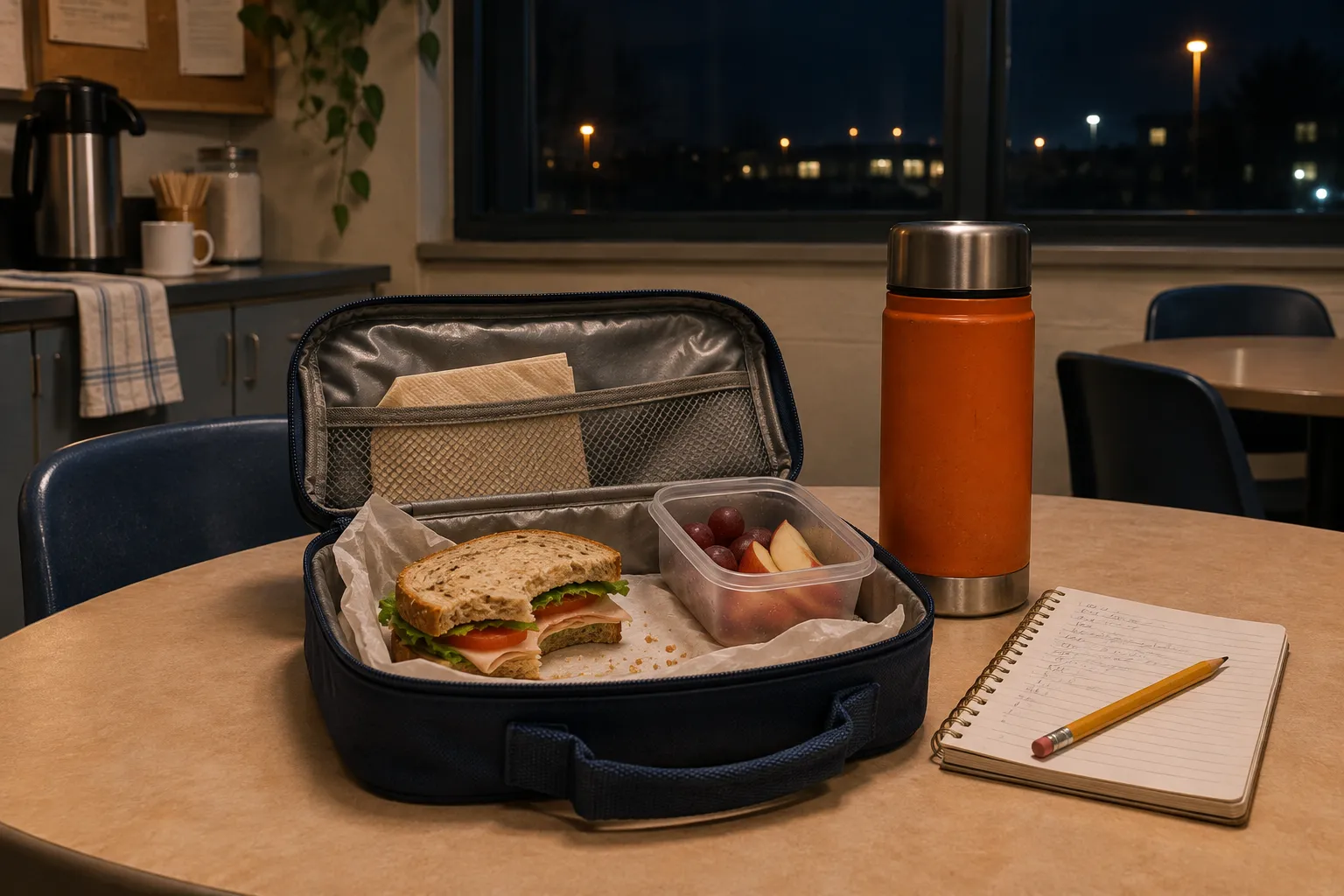
You start work Monday evening and unwrap a sandwich at 2 a.m. Which day gets the entry? Log it under Tuesday, when you ate it. Add a few words, such as “break on the shift that started Monday at 9 p.m.” That gives your dietitian both a date to look up and a way to place the meal in your working night.
Consider Nora, a fictional shift worker. She clocks in at 9 p.m. Monday and finishes at 7 a.m. Tuesday. She would like enough time to sit down and finish a meal. She decides to record a night when she had to leave the break room halfway through.
Packing the sandwich belongs in Monday’s story. Under Tuesday, Nora records half a sandwich at each break and the apple at the second one. If she records a voice note at home at 7:30 a.m., “half around two, the rest around four” preserves the sequence. Using the time she opened the app would make it look as though she ate after work.
On November 1, 2026, in U.S. locations that observe daylight saving time, clocks went from 2 a.m. back to 1 a.m. That night there were two different moments when the clock read 1:15 a.m. If you know which it was, add “after the clocks went back.” If you’re unsure, something you do remember, like “on my second break,” will still put the meal in order. U.S. clock change dates and times from NIST.
At the appointment, open Monday evening and Tuesday morning with your client. Tuesday’s entries show two eating occasions. Nora’s words explain that she was trying to finish one meal. You might ask, “On nights when you get to finish your food, who covers for you?” If she wants to try a different handoff with her coworker, at the next appointment you can ask whether she got to sit down and finish her meal.
Recording the time can also help distinguish a work night from a day off. In a nonrandomized study at the Port of Rotterdam, participants recorded food and drinks during two night shifts and one day off at each measurement period. The team collected data from 2023 to 2025 and published the paper on October 8, 2026. The participants were men from one company. Their schedules can inform a conversation about timing, but they don’t establish an ideal mealtime for every night worker. Read the study by van der Rhee and colleagues in Frontiers in Nutrition.
In Diet Mate, people can speak or type their meal entries and include the context they want to keep. People who want to share their journal can link their account to their dietitian’s. While sharing is active, the dietitian can open both dates. The person can withdraw access. Weeks later, “got called back” still explains why the sandwich appears twice. That is one practical use of nutritional memory.
The professional workspace is free to view shared journals. If you use the optional paid AI assistant to look for other interrupted breaks, open the meals it cites and check your interpretation with your client. The diary reflects what they chose to record. How to check an AI food diary summary.
To try moving between dates, open the fictional journal in the Diet Mate professional workspace demo (in French). If you work nights, show it to your dietitian and pick one break you’d like to talk through at your next visit.
